In a world where the planet seems to be throwing a tantrum, sustainable apartment living offers a breath of fresh air—literally. Imagine sipping your morning coffee while knowing your living space is as eco-friendly as your favorite reusable shopping bag. It’s not just a trend; it’s a lifestyle choice that benefits both the Earth and your wallet.
Understanding Sustainable Apartment Living
Sustainable apartment living focuses on eco-friendly choices within urban spaces. It nurtures a balance between personal comfort and environmental responsibility.
Definition of Sustainable Living
Sustainable living emphasizes reducing carbon footprints. This approach includes practices that conserve resources and enhance energy efficiency. Incorporating renewable energy sources, like solar panels, contributes significantly to sustainability. Water conservation methods, such as low-flow fixtures, further minimize waste. Residents choose sustainable materials in interior design, using recycled or upcycled products. Hence, sustainable living fosters a lifestyle that respects the planet while meeting daily needs.
Importance of Sustainability in Urban Areas
Sustainability plays a critical role in urban development. Urban areas face unique challenges, like population density and resource scarcity. Integrating sustainable practices helps mitigate environmental degradation. Clean air initiatives, for instance, promote healthier living conditions. Efficient waste management systems reduce landfill waste, encouraging recycling. Green spaces enhance biodiversity and provide residents with leisure areas. Prioritizing sustainability in cities supports both ecological preservation and improved quality of life for all inhabitants.
Key Features of Sustainable Apartments
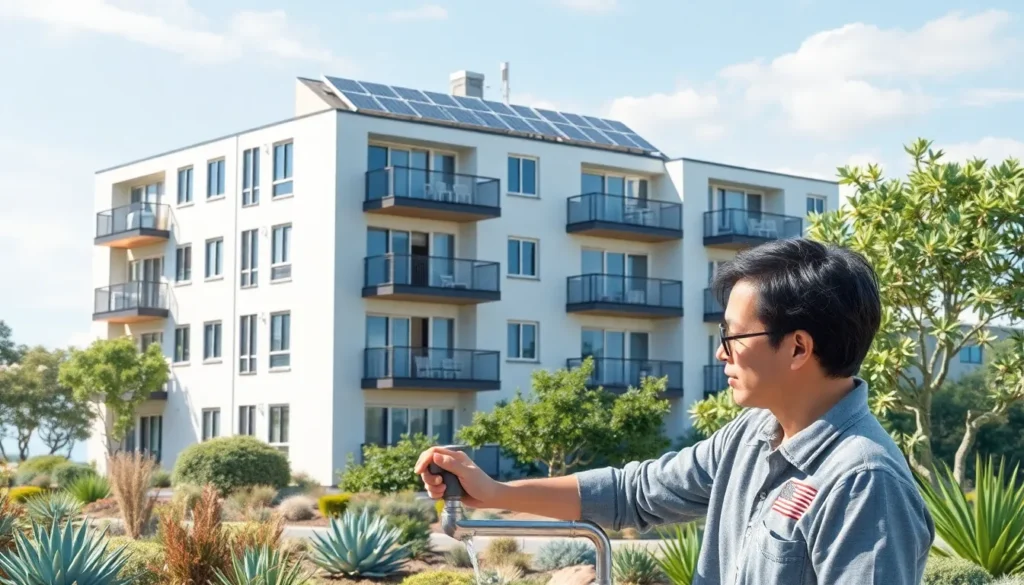
Sustainable apartments incorporate various features that contribute to eco-friendly living. These aspects focus on minimizing environmental impact while ensuring comfort for residents.
Energy Efficiency
Energy efficiency represents a cornerstone of sustainable apartment living. Apartments utilize high-performance insulation that reduces heating and cooling demands. They implement Energy Star-rated appliances, which consume less energy compared to standard models. Many buildings feature smart home technology to optimize energy usage based on resident patterns. Solar panels often supplement traditional energy sources, lowering utility costs while harnessing renewable energy. By prioritizing these elements, sustainable apartments significantly reduce carbon footprints and utility expenses for their occupants.
Water Conservation
Water conservation is crucial in achieving sustainability within apartments. Low-flow fixtures, including showerheads and faucets, minimize water consumption without sacrificing performance. Dual-flush toilets offer residents the option to use less water for smaller flushes. Rainwater harvesting systems collect and repurpose rainwater for irrigation, decreasing the reliance on municipal water systems. Native landscaping reduces the need for extensive watering, supporting local ecosystems. Through these water-saving strategies, sustainable apartments enhance environmental responsibility while saving residents on water bills.
Benefits of Sustainable Apartment Living
Sustainable apartment living provides a myriad of advantages that benefit both residents and the environment.
Environmental Impact
Eco-friendly apartment designs play a crucial role in reducing carbon footprints. Energy-efficient systems and renewable energy sources significantly lower greenhouse gas emissions. Sustainable apartments often incorporate green building materials that minimize environmental harm. Water-saving fixtures support local ecosystems by conserving vital resources. Urban areas benefit from improved air quality through plants and green spaces integrated into the living environment. Overall, these practices help mitigate urban pollution and foster healthier communities.
Economic Advantages
Living in a sustainable apartment leads to considerable financial savings. Energy-efficient appliances and smart technology cut utility costs significantly. Many residents enjoy lower monthly bills, allowing for more budget flexibility. Sustainable living often enhances property value, attracting eco-conscious buyers or renters. Tax incentives for energy-efficient upgrades can provide additional monetary benefits over time. Long-term savings further contribute to the appeal of choosing environmentally responsible living spaces.
Tips for Implementing Sustainable Practices
Sustainable living combines practical steps with thoughtful choices. Implementing eco-friendly practices boosts both living standards and the environment.
Choosing Eco-Friendly Materials
Selecting sustainable materials plays a critical role in eco-friendly apartment living. Opt for bamboo flooring due to its rapid growth rate, which minimizes deforestation. Choose recycled materials for countertops and other surfaces to reduce waste. Additionally, consider low-VOC paints and finishes that improve indoor air quality. Incorporate reclaimed wood for furniture or fixtures to give a unique touch while supporting sustainable forestry. Prioritize materials that promote durability and longevity, ensuring fewer replacements and lower impact on resources.
Incorporating Green Spaces
Creating green spaces within or around apartments enhances overall well-being and supports local ecosystems. Install potted plants on balconies or rooftops to improve air quality and add visual appeal. Community gardens foster a sense of belonging while providing fresh produce. Green roofs provide insulation, reducing energy consumption and stormwater runoff. Incorporate native plants in landscaping to require less water and attract local wildlife. Enhance outdoor areas with seating for relaxation, making sustainable living more enjoyable for residents.
Embracing sustainable apartment living represents a meaningful shift towards a more environmentally conscious lifestyle. By making eco-friendly choices residents can not only reduce their carbon footprints but also enjoy financial savings. The integration of energy-efficient appliances and water conservation techniques creates a harmonious balance between comfort and responsibility.
As urban areas continue to grow the importance of sustainability becomes even more critical. Adopting these practices fosters healthier communities and enhances the quality of life for all residents. With every small change made in sustainable living individuals contribute to a larger movement that prioritizes both the planet and personal well-being.