Ever wondered why your iPhone seems to be devouring data like a hungry hippo? You’re not alone. Many users find themselves scratching their heads, wondering where all that precious data is disappearing to. Luckily, finding your data usage isn’t as complicated as deciphering a cryptic text from your friend.
Understanding Data Usage On iPhone
Data usage tracking on iPhone provides valuable insight into cellular consumption. Accessing this information isn’t complicated and can illuminate which apps consume the most data.
iPhone users can view their data usage through the Settings app. This app features a dedicated section for tracking cellular data. Users can find this under Settings > Cellular. Here, a detailed overview of data consumption appears, listing each app’s individual usage.
Monitoring data usage helps prevent overages. Many users discover that certain apps, such as streaming services or social media platforms, consume vast amounts of data. This allows for better management and optimization of data plans.
Adjust settings to optimize data consumption further. Enabling low data mode reduces background data usage, ensuring apps use data more efficiently. In addition, users can restrict apps from using cellular data for non-essential activities, such as automatic updates or syncing.
Resetting data usage statistics regularly keeps track of monthly usage easily. Users can reset these statistics at the start of a billing cycle to monitor changes over time.
Identifying data-heavy apps helps prioritize adjustments. Users often find surprising insights when reviewing their usage, leading to more informed decisions about data management.
Tracking data usage on iPhone transforms how users approach their cellular plans. Given the increasing reliance on mobile data, understanding this metric is crucial for efficient and economical smartphone usage.
Where To Find Data Usage On iPhone
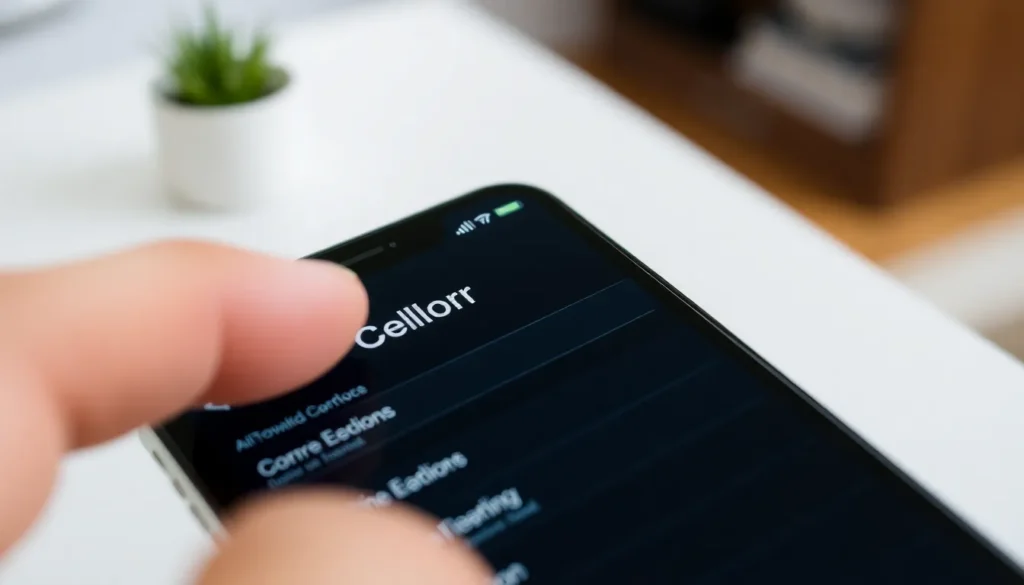
Finding data usage on an iPhone is straightforward. Users can check this information through the built-in Settings app.
Using Settings App
Open the Settings app to track data consumption. Tap on “Cellular” to access data usage statistics. Users see the total data used in the current period, along with a list of apps and their respective data amounts. Scrolling down displays individual app usage, making it easy to identify high-consuming apps. Consider resetting statistics at the start of each billing cycle for an accurate month-to-month comparison. This simple approach allows users to monitor their habits more effectively.
Using Cellular Data Settings
Cellular Data settings provide further control over data usage. Users can enable or disable cellular data for specific apps. Navigate to the “Cellular” option in Settings to access these settings. Toggle the switch next to each app to restrict or allow cellular data access. Prioritizing non-essential apps for Wi-Fi usage can significantly minimize data consumption over time. Turning on “Low Data Mode” offers an additional way to conserve data, optimizing how apps function in the background. These settings empower users to manage their data plans actively.
Monitoring Data Usage
Monitoring data usage on an iPhone provides essential insights for users managing their cellular plans. Effective tracking allows individuals to identify data-heavy apps and make informed choices about their usage.
Using Third-Party Apps
Third-party apps can enhance data monitoring capabilities. Popular options include My Data Manager and Datally, which offer intuitive interfaces for tracking usage trends over time. These apps often feature alerts for data limits, helping users stay within their data plans. Comparatively, they provide more detailed analytics than the built-in settings, allowing for better management of cellular consumption. Users can sync their apps across devices to keep track of data in real-time and make adjustments as needed.
Checking Data Usage History
Checking data usage history enables users to assess their cellular activity over specific time frames. The iPhone’s Settings app shows the amount of data consumed in the current period. Users can reset this data periodically or at the beginning of each billing cycle for precise tracking. Different apps show distinct usage patterns, helping users pinpoint which services contribute most to their overall consumption. This functionality supports proactive management of data limits, thereby reducing unexpected overages.
Tips For Managing Data Usage
Managing data usage effectively requires a combination of built-in features and mindful habits. Start with enabling Low Data Mode, which significantly reduces data consumption by limiting background activities for apps. Restrict apps that don’t need cellular access, ensuring that only essential applications use data. Users can achieve this by navigating to Settings > Cellular and toggling off cellular data for specific apps.
Regularly resetting data statistics provides better tracking of monthly usage patterns. At the beginning of each billing cycle, reset statistics under Settings > Cellular to maintain accuracy in monitoring. Consistently checking data usage encourages users to stay aware of their consumption habits.
Utilize third-party apps like My Data Manager and Datally for enhanced data monitoring. These apps offer detailed insights into individual app usage, alert features for nearing data limits, and user-friendly interfaces that simplify data management. Users find that visualizing data trends helps with making informed decisions regarding their data plans.
Exploring alternate connectivity options can also contribute to data savings. Consider using Wi-Fi whenever possible, especially for data-heavy activities such as streaming or downloading large files. Users who prioritize Wi-Fi connections reduce their cellular data usage effectively.
Examining data usage history empowers users to evaluate overall cellular activity over specified time frames. Tracking this history allows them to identify patterns and adjust their habits accordingly. By recognizing which apps consume excessive data, users gain insight into modifying their app usage behaviors, ultimately improving their data management capabilities.
Understanding data usage on an iPhone is crucial for managing cellular plans effectively. By utilizing the Settings app users can gain insights into their data consumption and identify which apps are the biggest culprits. This knowledge empowers them to make informed decisions about their usage habits.
Incorporating features like Low Data Mode and leveraging third-party apps can further enhance data management. Regularly resetting data statistics ensures users track their consumption accurately each month. With these tools and strategies in place users can confidently navigate their data needs while minimizing unexpected overages.